Power Tools for Apartments: Small-Space DIY Without the Mess
Posted by Home DIY Online Editorial Team Posted Revised Topic: Power Tools
In an apartment, start with a compact cordless drill/driver, add a hand saw or a small corded sander only when a project needs it, and plan around noise, dust, battery charging and your lease. Check your lease and ask your landlord before drilling, cutting or sanding. Wear hearing and eye protection, control dust, and charge batteries on a hard surface with the supplied charger.
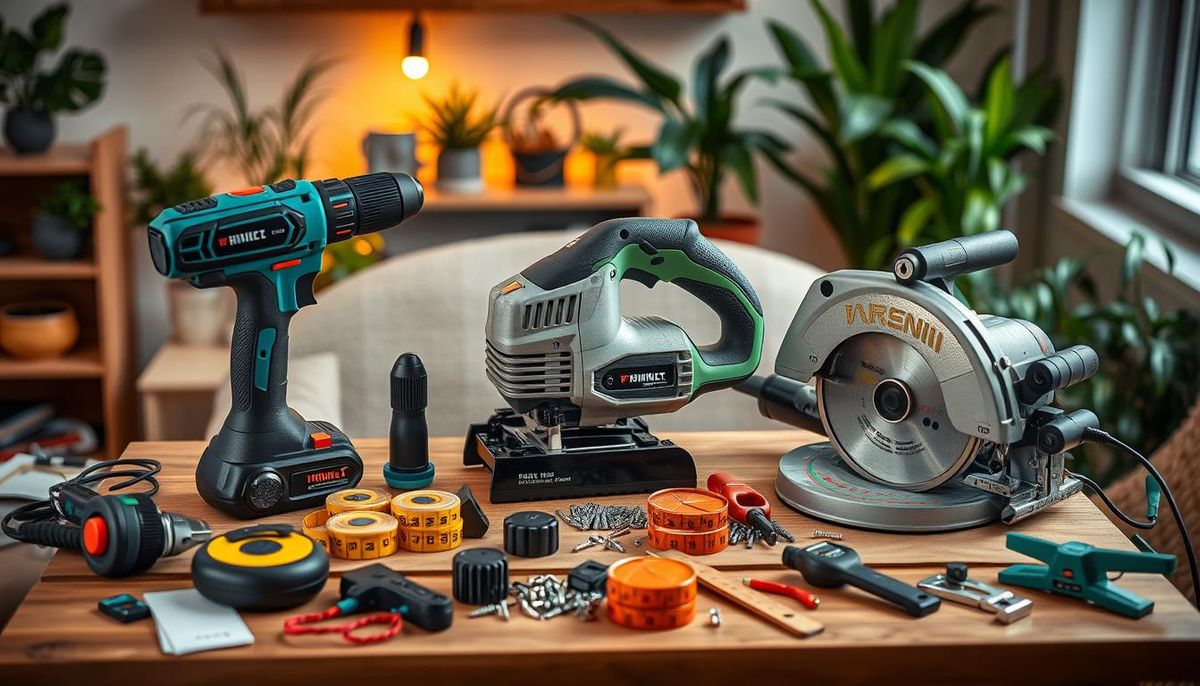
Covered in the guide: Essential Power Tools Every DIYer Should Own
The right power tools for an apartment are compact, mostly cordless and few in number, and the real planning is about noise, dust, charging and your lease. This guide covers all four. It supports our main list of essential power tools every DIYer should own.
Everything here assumes you rent or live in a shared building. We cannot tell you what your lease allows. Read it, and ask your landlord in writing before you drill, cut or sand anything.
Which power tools suit an apartment?
A compact cordless drill/driver is the one tool most apartments need. It handles furniture assembly, shelves and hardware. Anything bigger is a judgment about space, noise and dust.
| Tool | Apartment fit | Watch for |
|---|---|---|
| Compact cordless drill/driver | Best first tool | Hidden wiring and pipes when drilling walls |
| Hand saw or small jigsaw | Good for small cuts | Noise and dust; cut outside if you can |
| Palm random orbit sander | Fine for small pieces | Dust; lead paint in older buildings |
| Circular saw | Poor fit indoors | Large, loud, and needs room; use outdoors |
| Table saw | Poor fit | Size, noise, injury risk |
For a drill, a 12V kit is light and small. Bosch lists its PS31-2A at 1.8 lb and 7 inches long. See our guide to compact power tools for smaller hands for spec comparisons.
For help on what to buy and when, read the starter kit guide. For what to learn first, see the beginner skills guide.
What should you check with your landlord first?
Check whether your lease allows drilling and fixing to walls, any quiet hours, and who is responsible for damage. Do this before you buy tools, not after.
Ask these questions in writing:
- May I drill into walls, ceilings or trim, and what size holes are acceptable?
- What are the building’s quiet hours?
- Who should I contact about hidden wiring or plumbing in a wall?
- Does the building have rules about charging batteries or storing them?
- If the building is older, has it been tested for lead paint?
Keep the reply. If the answer to drilling is no, look at no-drill options and hand tools. See our guide on DIY project ideas that only need hand tools.
How do you manage power tool noise in an apartment?
Plan loud work for daytime, warn neighbors, and protect your own hearing. NIOSH says sounds around 85 dBA make you raise your voice to be heard 3 feet away, and lists power tools among equipment that can produce 85 to 90 dBA. NIOSH recommends precaution at that level.
Practical steps:
- Wear hearing protection. The Craftsman manual says to wear ear protectors with impact drills.
- Do loud work in short blocks and within your building’s quiet hours.
- Tell neighbors when you plan a loud job.
- Use hand tools for small cuts and screw-driving where you can.
- Do the cutting elsewhere. Cut boards outdoors or at a store that offers cutting, and assemble indoors.
Our guide to power tool safety covers hearing and eye protection in more detail.
How do you control dust and fumes indoors?
Control dust at the source, and keep sanding to small jobs. Dust travels through a small space and settles on everything.
- Choose a sander with dust collection. The Bosch ROS20VSC lists a dust canister and hook-and-loop discs.
- Open a window and keep doors closed to other rooms.
- Wear a dust mask and eye protection.
- Clean with a vacuum, not a broom.
- Protect floors and furniture with drop cloths.
For lead, EPA says homes built before 1978 are more likely to have lead-based paint, and that sanding is a common activity that can create hazardous lead dust. EPA recommends hiring a lead-certified contractor, and says that if you do the work yourself you should use lead-safe work practices. In an older apartment, do not sand painted surfaces without checking with your landlord first. For more on dust, see shop dust collection and accessories for dust collection.
How do you avoid hitting wires and pipes in a wall?
Treat every wall as if it hides wiring. The Craftsman manual says to hold power tools by insulated gripping surfaces when the cutting tool may contact hidden wiring, because contact with a live wire can make the tool’s exposed metal parts live and shock you. The Black+Decker saw manual says to use extra caution when sawing into existing walls or other blind areas.
Before drilling, use a stud and wire detector, avoid the area around outlets and switches, and ask your landlord about plumbing runs. Do not do electrical work yourself. Our guides on electrical testing tools and the circuit breaker panel explain the basics, and a licensed electrician should handle any wiring.
How do you charge and store batteries safely in an apartment?
Charge on a hard, flat surface with the supplied charger, and do not leave batteries charging while you are away. NFPA gives these tips:
- Use the cord and charger that came with the device or ones approved by the manufacturer.
- Charge on a table or desk, and not on a bed, couch or under pillows.
- Stop using a battery that feels very hot, swells, smokes or smells strange.
- Unplug when fully charged.
- Charge larger items such as e-bikes, scooters and power tools outside and away from exits.
The last tip may not be practical in an apartment. If you cannot charge outside, keep the charger away from exits and soft items, and follow your building’s rules. When a battery fails, EPA says to take it to a recycling or household hazardous waste collection point, and never to put it in household garbage or recycling.
For care of batteries, see extending the life of your power tool batteries.
How do you store power tools in a small space?
Store tools vertically and off the floor, and keep batteries and chargers together in one dry spot. A small wall rack, a closet shelf or a rolling cart can hold a drill, bits and a few accessories.
See power tool storage solutions, how to organize power tool accessories and mobile storage carts. For accessories sized to small spaces, see accessories for small-space projects.
Which power tools should you skip in an apartment?
Skip tools that need space, make heavy dust or are risky without a proper setup. A table saw is the clearest example: CPSC says table saws are regularly involved in injuries and advises always using the blade guard for through cuts and a push stick for small pieces. A full-size circular saw also needs a clamped workpiece, support on both sides of the cut and room to stand out of line with the blade, as the Black+Decker manual describes.
Large sanders and anything that needs a long cord and a dedicated outlet are also poor fits. If a project needs one of these, consider doing the cutting outdoors, at a shared workshop or at a store that offers cutting, then assembling at home. See our guide to power tools that are not worth the money for ways to avoid buying tools you do not have room for.
What is a quick checklist before each job?
Run through this list every time:
- Lease and landlord checked for the job?
- Hearing and eye protection on, and dust mask ready?
- Work clamped to a stable surface?
- Wall checked with a stud and wire detector?
- Battery charged on a hard surface earlier, and charger put away?
- Dust plan in place: window, drop cloths, vacuum?
- Neighbors told if the job is loud?
CPSC’s checklist adds the basics: read the manual, wear goggles and snug clothing, and never carry a tool by its cord.
What apartment projects work well with a drill?
A drill/driver covers many renter-friendly projects: assembling furniture, installing shelving into studs or with appropriate anchors, hanging a curtain rod, and mounting a towel bar. Check your lease before you drill into walls, and ask about patching holes at move-out. For shelves and frames, see how to use layout and measuring tools when hanging shelves.
Questions we get
What power tools do I need for an apartment?
A compact cordless drill/driver covers most apartment tasks, such as assembling furniture, hanging shelves and mounting hardware. Add a hand saw for cuts, and a small sander only if you refinish. Skip large corded saws and table saws unless you have outdoor or shared workshop space. Check your lease before you drill into walls.
Can I use power tools in my apartment?
Usually for small jobs, but check your lease and building rules first. Some leases limit alterations, work hours or noise, and drilling into walls may need landlord approval. We cannot tell you your building's rules, so ask in writing. Keep noisy work to daytime hours and tell neighbors when you plan something loud.
How loud are power tools, and do I need hearing protection?
NIOSH says power tools can produce about 85 to 90 dBA, and that at 85 dBA you often need to raise your voice to be heard 3 feet away. NIOSH recommends precaution at that level. Wear hearing protection for drilling, sawing and sanding, and the Craftsman manual says to wear ear protectors with impact drills.
How do I control dust in a small space?
Use a sander with dust collection, work near an open window if you can, and clean up with a vacuum rather than sweeping. The Bosch ROS20VSC lists a dust canister. Wear a dust mask for sanding. If the building was built before 1978, do not sand paint until you have checked for lead, as EPA advises lead-safe practices.
Is it safe to charge power tool batteries in an apartment?
Charge carefully. NFPA advises using the supplied or approved charger, charging on a hard, flat surface, unplugging when full, and stopping use if a battery swells, smells or is very hot. It also advises charging larger items such as power tools outside and away from exits. Where that is not practical, avoid soft surfaces and charge while you are home.
How do I avoid hitting wires or pipes when drilling a wall?
You cannot see inside a wall, so be cautious. The Craftsman manual says to hold the tool by its insulated grip when the bit may contact hidden wiring, since a live wire can make exposed metal parts live. Use a stud and wire detector, avoid drilling near outlets and switches, and ask your landlord or an electrician about plumbing and wiring.
Where we got this
- CDC NIOSH: Noise-induced hearing loss (cdc.gov)
- NFPA: Fire Prevention Week focuses on lithium-ion battery charging safety (nfpa.org)
- EPA: Renovation, Repair and Painting (RRP) Program for consumers (epa.gov)
- Craftsman CMCD700 20V MAX drill/driver instruction manual (toolservicenet.com)
- Bosch PS31-2A 12V Max 3/8 in. drill/driver kit (manufacturer product page) (boschtools.com)
- Bosch ROS20VSC 5 in. palm random orbit sander (manufacturer product page) (boschtools.com)
- CPSC: Home Safe power tools checklist (cpsc.gov)
- EPA: Used lithium-ion batteries (epa.gov)
Keep reading
- Essential Power Tools Every DIYer Should Own
Which essential power tools to buy first, what each one does, and how to choose, power, store and use them safely, with links to every guide.
- Power Tool Warranties: What Is Covered, What Is Not, and What Voids Them
Compare DeWalt, Milwaukee, Makita and Bosch warranty terms from their official pages, plus registration rules and what voids coverage.
- The Best Power Tools for Building Custom Furniture
The power tools that matter for building furniture: table saw, pocket-hole jig, Domino joiner and sander, with maker specs and table saw safety facts.
- DeWalt vs. Milwaukee Power Tools: Which Brand Fits Your DIY Shop?
DeWalt vs Milwaukee compared on battery platform, tool range, warranty and torque, using the makers' own specs, with a pick for each type of DIYer.
- Circular Saw Comparison: Five 7-1/4 Inch Models Side by Side
Five 7-1/4 inch circular saws from DEWALT, Makita, Bosch and BLACK+DECKER compared on amps, weight, depth, bevel and brake, plus how to choose.
- Top 5 Oscillating Multi-Tools Compared by Manufacturer Specs
Five oscillating multi-tools compared on speed, angle, weight, accessory system and warranty, using only manufacturer spec pages, plus how to choose.