DIY Outdoor Privacy Screens: Panels, Fences and Plants
Posted by Home DIY Online Editorial Team Posted Revised Topic: Outdoors
A DIY privacy screen is a panel, trellis, fence or row of plants that blocks sightlines into your yard. Evergreen shrubs screen all year when spaced 2 to 3 feet apart, while panels and trellises work immediately. Check local height and permit rules first, call 811 before digging post holes, and remember that solid screens catch wind. Choose the option that fits your space and patience.
Covered in the guide: How to Build a Deck: Permits, Footings, Framing and Finishing
A privacy screen blocks sightlines from neighbors, the street or a second-story window. You can build one from panels, a trellis, a fence or living plants, and the best choice depends on how much space you have, how soon you want privacy and what your town allows. This guide compares the options and covers the building and planting details. For taller or longer runs, our fence installation guide goes deeper, and for the wider yard plan start with our deck building guide.
What are the best DIY privacy screen options?
Match the screen to the spot. The table above compares the main options by time to privacy and what to watch for.
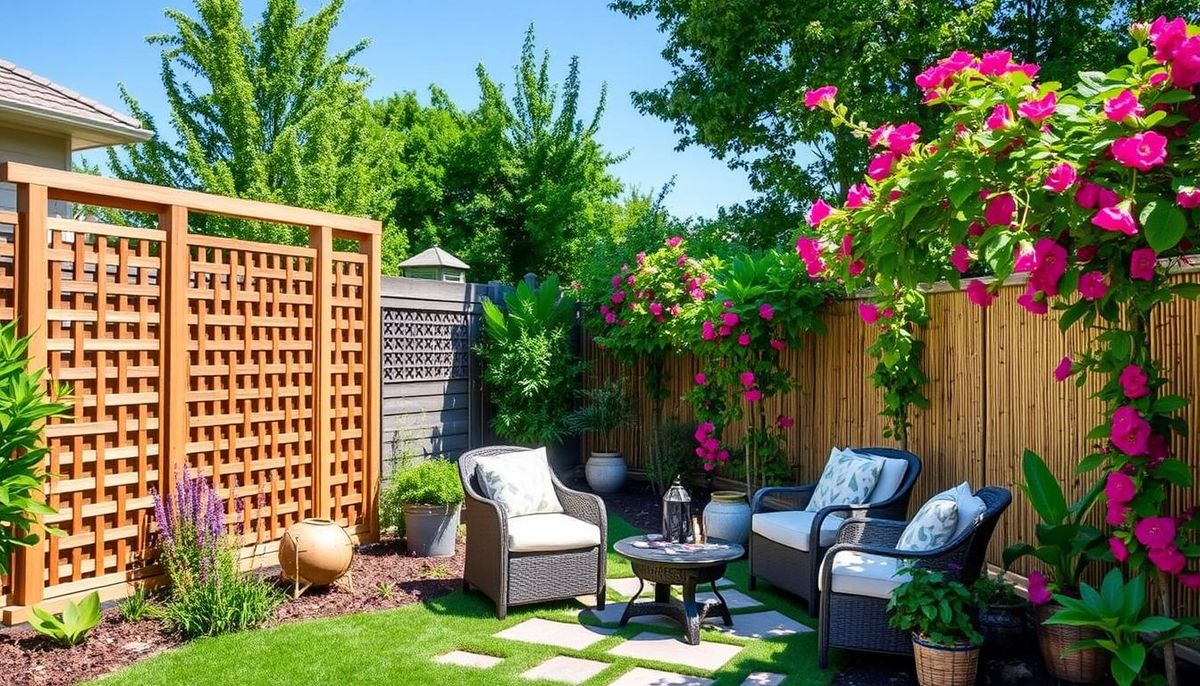
- Freestanding panels or lattice screens shield a patio or hot-tub corner right away.
- A trellis with climbing plants gives a green screen in a small footprint.
- A fence covers a long run and defines a boundary.
- An evergreen hedge screens a long edge softly, but needs seasons to grow.
- A mix of a short panel and plants gives quick cover and long-term softness.
Do I need a permit or HOA approval for a privacy screen?
Often yes, so check before you buy. Cities set rules for walls and fences, including height limits and permit thresholds; Scottsdale, Arizona, publishes its rules on a walls and fences page. Homeowner associations may regulate style, height and materials.
Ask your building or zoning office and your HOA:
- What is the maximum height at the side, back and front of the lot?
- Is a permit needed for a freestanding screen or only for a fence?
- Are there sight-line rules near corners and driveways?
- How close to the property line can I build?
Also look at your survey before building near a boundary. If a neighbor shares the line, talk before you build.
How do I build a freestanding privacy panel?
A freestanding panel is a frame with slats or lattice, held up by posts set in the ground or by a base. Panels are quick and flexible, and they are the simplest DIY screen.
- Decide the location and measure the length and height you need, within local limits.
- Call 811 if posts go in the ground (see below).
- Set posts in footings sized for the height and wind exposure. For tall or solid panels, ask your building department or an engineer what footing size to use.
- Attach rails and fill in with slats, lattice or boards.
- Use connectors made for outdoor use. Simpson Strong-Tie describes its Outdoor Accents hardware as load-rated, galvanized steel made for decks, fences, pergolas and other outdoor structures, and its installation instructions list the fasteners.
- Seal or stain the wood. See weatherproofing outdoor projects.
How do wind and footings affect a privacy screen?
A solid screen catches wind like a sail, so it needs deeper, stronger footings than an open one. Leaving gaps between slats or using lattice lets some wind pass and reduces the load. Footing size depends on height, soil and your local wind rating, so get it from your building department, an engineer or the instructions of a panel kit rather than guessing.
Check posts for plumb after the first storm and re-tighten loose fasteners.
How do I make a trellis privacy screen?
A trellis supports climbing plants so they form a leafy wall. Build the trellis strong enough to carry the plant weight when it is full, plus wind. Our guide to garden structures such as trellises and arbors covers the frame and the support details.
Choose a climber suited to your climate and sun. It may take a season or more to cover, so combine it with a panel if you need immediate privacy.
How do I plant an evergreen privacy hedge?
Choose a variety by its mature size, then plant at the right spacing. The Arbor Day Foundation says to plant 2 to 3 feet apart, never closer than 24 inches, and warns about root crowding in rows.
| Plant | Mature size (Arbor Day Foundation) | Spacing |
|---|---|---|
| North privet (deciduous) | 8 to 12 feet tall, 4 to 6 feet wide | About 24 inches |
| Emerald arborvitae (evergreen) | 10 to 15 feet tall, trimmable to about 2 feet wide | 2 to 3 feet, 24 inches minimum |
| American arborvitae (evergreen) | 20 to 30 feet tall, about 12 feet spread | About 3 feet |
Evergreens screen all year, but deciduous plants lose their leaves, according to the same source. Wide spread means American arborvitae needs room. After planting, the Foundation advises shaping the hedge one to two seasons later, trimming a few times a year, and keeping the base wider than the top so light reaches the lower leaves.
Keep roots and branches away from foundations, drains and utility lines, and check mature height against overhead wires.
Call 811 before you dig
Post holes and planting holes are digging. Call 811, wait for the utilities to mark their lines, and hand-dig near the marks. Lead times vary by state; NC811 requires three full business days. Do not skip this step on a small project.
How tall should a privacy screen be?
Make it as tall as you need to block the sightline, within your local limit. The height that matters is the height of the eyes you want to block, so sit where you relax and look toward the view you want to hide. A screen placed close to your seat can be lower than one at the far property line, because the line of sight rises with distance.
Local rules often set different limits for side, rear and front yards, and corner lots usually have extra sight-line rules. Ask your zoning office before you build, and write down the answer.
What materials and finishes work for a screen?
Use exterior-rated materials and finish them as the maker advises. Wood needs a stain or sealer; our guide to protecting outdoor projects from the weather covers moisture and sun. Use galvanized or coated hardware, and rated connectors for the posts and rails. For lattice and slats, space the gaps to let some wind through.
Check each product’s instructions for the fasteners it requires, and keep the manual for repairs.
What mistakes should I avoid with privacy screens?
Most failures are about footings, rules and growth:
- Building a tall solid screen on shallow footings.
- Skipping the permit or HOA check, then being told to take it down.
- Planting hedge shrubs closer than 24 inches or ignoring mature spread.
- Choosing a deciduous plant and expecting winter privacy.
- Putting the screen on the neighbor’s side of the line.
- Digging post holes before 811 has marked utilities.
Which privacy screen is best for a small patio?
For a small patio or deck, a freestanding panel or a trellis is usually the best fit. It gives immediate privacy and does not need the space of a hedge. Place the screen where it blocks the sightline from your seat, which is often closer to you than to the property line.
Pair it with plants in containers to soften the look. Our outdoor seating guide shows seating that works with a screen, and an overview of hardscaping covers the patio surface.
How do I screen a long property line?
Combine a short fence or panel with an evergreen hedge. The fence gives cover while the plants grow, and the hedge softens it. For borders that follow the line, see our natural garden borders guide. Keep within your local height limit and check the property line first.
How do I maintain a privacy screen?
Reseal or restain wood, tighten fasteners, trim hedges and train vines. Check posts for lean after storms. Replace lattice or slats that rot, and cut back plants that crowd the structure.
| Option | Time to privacy | Watch for |
|---|---|---|
| Freestanding panel or lattice screen | Immediate | Footings and wind; solid panels act like sails |
| Trellis with climbing plants | A season or more as vines grow | Structure must carry plant weight and wind; choose a hardy vine |
| Fence | Immediate | Permit and height rules; footings; see our fence guide |
| Evergreen hedge | Several seasons | Plant 2 to 3 feet apart; check mature size; trim regularly |
| Mixed planting with a short fence or panel | Immediate plus growing | Combines quick cover with long-term softness |
For a patio or deck, a panel or trellis gives immediate privacy. For a long property edge, plant evergreens and add a short panel or fence to cover the gap while they grow.
Questions we get
What is the cheapest way to add privacy to a yard?
There is no single cheapest option, because costs depend on your region, the length you need and whether you build or plant. Freestanding panels or a trellis give immediate privacy for a patio or deck, while shrubs take seasons to fill in. Compare local plant and lumber prices rather than relying on a national figure, and count watering and trimming for plants.
How far apart should I plant privacy shrubs?
Plant hedge shrubs 2 to 3 feet apart, never closer than 24 inches, according to the Arbor Day Foundation, which warns about root crowding when planting in rows. It lists 24 inches for North privet, 2 to 3 feet for Emerald arborvitae and about 3 feet for American arborvitae. Always check the tag for the mature spread of the variety you buy.
What privacy screen plants stay green all year?
Evergreens do. The Arbor Day Foundation says evergreens screen year-round, while deciduous plants add fall color or flowers but lose leaves in winter. Its examples of evergreen screens include the arborvitae varieties it lists. Pick a variety hardy in your zone and sized for your space.
Do I need a permit for a privacy screen or fence?
Often you do, depending on the height and how it is built. Many cities publish rules for walls and fences, including permit thresholds and height limits, such as Scottsdale, Arizona's walls and fences page. Homeowner associations may add design rules. Check with your building or zoning office and your HOA before you buy materials, especially near a property line or street corner.
How do I keep a privacy screen from blowing over?
Set posts in properly sized, deep footings, use rated connectors, and consider screens with gaps that let some wind through. Solid panels act like sails. Simpson Strong-Tie makes load-rated galvanized connectors for fences and other outdoor structures, and its installation instructions give the fastener details. For tall or solid screens, ask your building department or an engineer for the footing size.
Do I need to call 811 before installing a privacy screen?
Yes, whenever you dig post holes or plant shrubs. Call 811 or use your state's 811 website, wait for the utilities to mark their lines, and hand-dig near the marks. Lead times vary. NC811, for example, requires three full business days. Skipping this step risks hitting gas, electric or communications lines.
Can I use a trellis and vines for privacy?
Yes, a trellis with climbing plants gives a green screen with a small footprint. Vines take a season or more to cover the trellis, and the structure must be strong enough to carry the plants and wind. Choose a plant suited to your climate and sun. Our trellis and arbor guide covers the structure, and a fence is an alternative.
Where we got this
- Arbor Day Foundation: Best Privacy Screen Trees and Shrubs (arborday.org)
- Simpson Strong-Tie: Outdoor Accents Essentials collection of outdoor living hardware (news.strongtie.com)
- City of Scottsdale, AZ: Walls and Fences (example of local permit rules) (scottsdaleaz.sitefinity.cloud)
- NC811: The 811 process (nc811.org)
Keep reading
- How to Build a Deck: Permits, Footings, Framing and Finishing
How to build a deck step by step: permits, footings, ledger flashing, fasteners and treated lumber ratings, based on the AWC DCA 6 prescriptive guide.
- Gravel, Mulch and Topsoil: How to Calculate Cubic Yards, Tons and Bags
Calculate cubic yards, tons and bags of gravel, mulch or topsoil: the area x depth formula, density table, bag counts and a worked 100 sq ft mulch bed.
- How Much Concrete Do I Need? Slab, Footing and Post Hole Formulas
Work out how much concrete a slab, footing or post hole needs: volume formulas, cubic yards, 40, 60 and 80 lb bags, waste and a worked 10 x 10 ft slab.
- Grilling Tool Sets Compared: Five Sets, Specs From the Makers
Compare five grilling tool sets from Weber, Cuisinart, Grillaholics, All-Clad and OXO by maker specs, plus what to check before you buy.
- Pressure Washers Compared: Five Models and Their Maker Specs
Compare five pressure washers from Snapper, Simpson, Ryobi, Westinghouse and Sun Joe by maker specs, with injury and recall safety you need.
- Yard Drainage Solutions: How to Fix Standing Water
Fix a wet yard: find the water source, grade 6 inches in 10 feet away from the house, then add swales, a French drain or a dry well where needed.